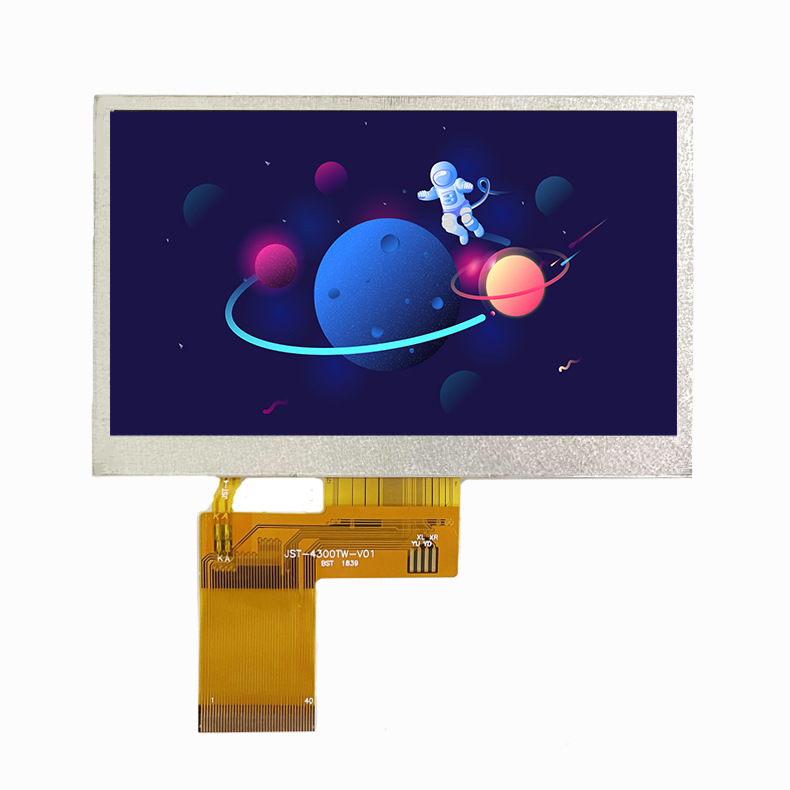
What is an OLED display: How does it work
OLED (Organic Light Emitting Diode) displays are a self-emissive display technology. The core technology involves organic semiconductor materials that emit light directly when electricity is applied, eliminating the need for a backlight module and liquid crystal components. This is fundamentally different from traditional LCD displays.
Their structure resembles a "sandwich," with each pixel's brightness and darkness independently controllable. They offer advantages such as ultra-high contrast, fast response time, thinness, flexibility, and wide viewing angles, making them widely used in products such as mobile phones, foldable devices, VR/AR devices, and televisions.
Key Characteristics of OLED Display
The main characteristics of OLED displays are reflected in their self‑emissive nature, structural and performance advantages, as well as a few minor limitations:
Self-emissive: OLEDs use organic semiconductor materials that emit light directly when electricity is applied, eliminating the need for a backlight module and liquid crystal components. This is fundamentally different from traditional LCD displays.
Structural characteristics: The structure resembles a "sandwich," where each pixel can be independently turned on or off.
Performance advantages: OLEDs offer ultra‑high contrast ratio, fast response time, thin and flexible form factor, wide viewing angles, and more.
Minor limitations: There is a risk of burn‑in, and the operational lifespan is slightly shorter than that of LCD displays. However, the relevant technologies are continuously being improved.
Difference Between An OLED Display and A Regular Display?
Here, the "regular display" mainly refers to the traditional LCD (Liquid Crystal Display). The core differences between the two are reflected in multiple key aspects, as shown in the following table:
Comparison Aspects | OLED Display | Regular Display (LCD) |
Light-emitting Principle (Core Difference) | Uses organic semiconductor materials to emit light directly when energized, without relying on a backlight module or liquid crystal components. | It does not emit light itself; it relies on a backlight module to provide light, and then controls light transmittance through the deflection of liquid crystal molecules to display images. |
Structure | Similar to a "sandwich", composed of substrate, anode, cathode, transport layers and light-emitting layer; simpler and thinner. | More complex structure, including backlight layer, liquid crystal layer, polarizer, filter and other components; overall thicker. |
Pixel Control | Each pixel can be independently controlled to turn on or off, achieving true black. | Cannot completely turn off a single pixel; only reduces light transmittance by controlling liquid crystal deflection, unable to achieve pure black, with low contrast. |
Key Performance | Fast response speed (microsecond level, no motion blur), flexible and bendable, wide viewing angle. | Slow response speed, not bendable, narrow viewing angle; the picture will be discolored and dim when viewed from the side. |
Limitations | Has a slight risk of screen burn-in (easy to leave residual shadows when displaying fixed images for a long time), and the service life is slightly shorter. | No risk of screen burn-in, longer service life, but relatively higher power consumption. |
In which fields are OLED displays typically used?
Smartphones: Standard in mid-to-high-end phones, and the foundation for foldable phones.
TVs: The top choice for high-end TVs, enabling ultra-thin, rollable designs.
Smartwatches/Bracelets: With low power consumption and high brightness, they've become almost standard in wearable devices.
Laptops/Tablets: Rapidly penetrating the market, offering better color and contrast.
Car Cockpits: Used in dashboards, center console screens, rear entertainment screens, etc., enhancing the sense of technology.
VR/AR Headsets: Micro OLED, due to its high resolution and low latency, has become the mainstream solution for near-eye displays.
In short: From your smartphone to your TV, your watch, to car screens and VR glasses, OLED is everywhere.
How An OLED Display Works?
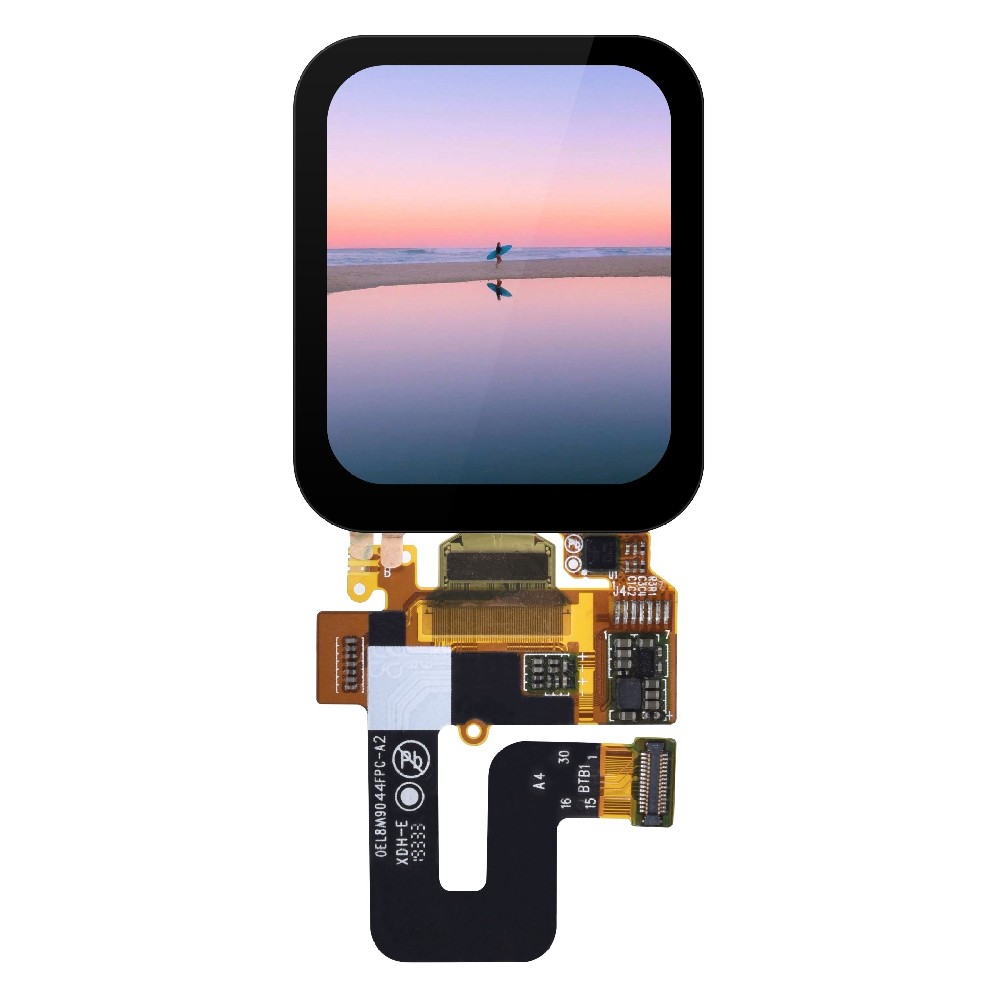
An OLED (Organic Light Emitting Diode) display works by converting electricity directly into light using organic (carbon-based) molecules. No backlight is needed—each pixel generates its own light.
The specific process can be divided into a three-layer structure and three steps:
1. Microstructure (like an extremely thin sandwich)
Bottom Layer (Anode): A transparent conductive layer that "draws" electrons during operation, leaving positively charged "holes."
Middle Layer: Contains two layers of organic material
Hole Transport Layer: Responsible for transporting holes to the light-emitting area
Light Emitting Layer: The core region, containing red, green, or blue organic light-emitting molecules
Electron Transport Layer: Responsible for transporting electrons to the light-emitting area
Top Layer (Cathode): A metallic conductive layer that injects electrons during operation.
2. Working Steps
Electrification: A voltage is applied between the anode (+) and cathode (-).
Movement: Electrons (negative charges) generated at the cathode and holes (positive charges) generated at the anode, under the influence of the electric field, each pass through the organic layers and move towards the middle light-emitting layer.
Recombination and Emission: Electrons and holes meet and "recombine" in the emissive layer. The electrons release excess energy, which is emitted as photons (light particles).
The color of the photon (= wavelength of light) is entirely determined by the type of organic molecules used in the emissive layer—emitting red, green, or blue light.
3. Image Composition
A complete pixel consists of three sub-pixels: red, green, and blue.
The brightness of each sub-pixel is controlled by the amount of current flowing through it: the greater the current, the brighter it is.
Each sub-pixel is independently controlled by a thin-film transistor (TFT), and then the three colors (red, green, and blue) are mixed to create a full-color image.
Key Effects
No backlight required → Black areas simply require the corresponding pixel to be turned off, resulting in no light emission → Perfect blacks and infinite contrast.
Extremely fast response (microseconds) → No ghosting.
Conclusion
OLED technology offers engineers a perfect blend of aesthetics, performance, and system efficiency. From high-contrast visuals to flexible form factors, OLED unlocks new design opportunities for embedded applications.
Combined with intelligent display solutions such as Proculus' UART TFT LCD modules, you can enjoy the advantages of both: cutting-edge display technology while minimizing development complexity.Make your interfaces more powerful and development more efficient.
Hello Lighting Co., Ltd. is a leading player in the field of research, development, manufacturing, and sales of TFT LCD display modules. We specialize in providing innovative display solutions for industries including industrial automation, medical devices, automotive, defense, aerospace, drones, and marine applications.
If you are looking for a reliable OLED display manufacturer, please feel free to contact us: sales@hello-lighting.com.We look forward to cooperating with you!