TFT vs IPS LCD Display: Which Is Better for Your Application?
The terms "TFT" and "IPS" often confuse engineers and purchasing professionals when selecting displays for industrial, automotive, or professional equipment, sometimes even leading them to mistakenly believe they are competing display technologies. This misunderstanding can result in poor selection decisions.
The key point is that IPS is not a replacement for TFT, but rather an advanced panel technology within the TFT-LCD series.
Understanding this relationship is the first step in making the right choice for your specific application.
What Is TFT Display Technology?
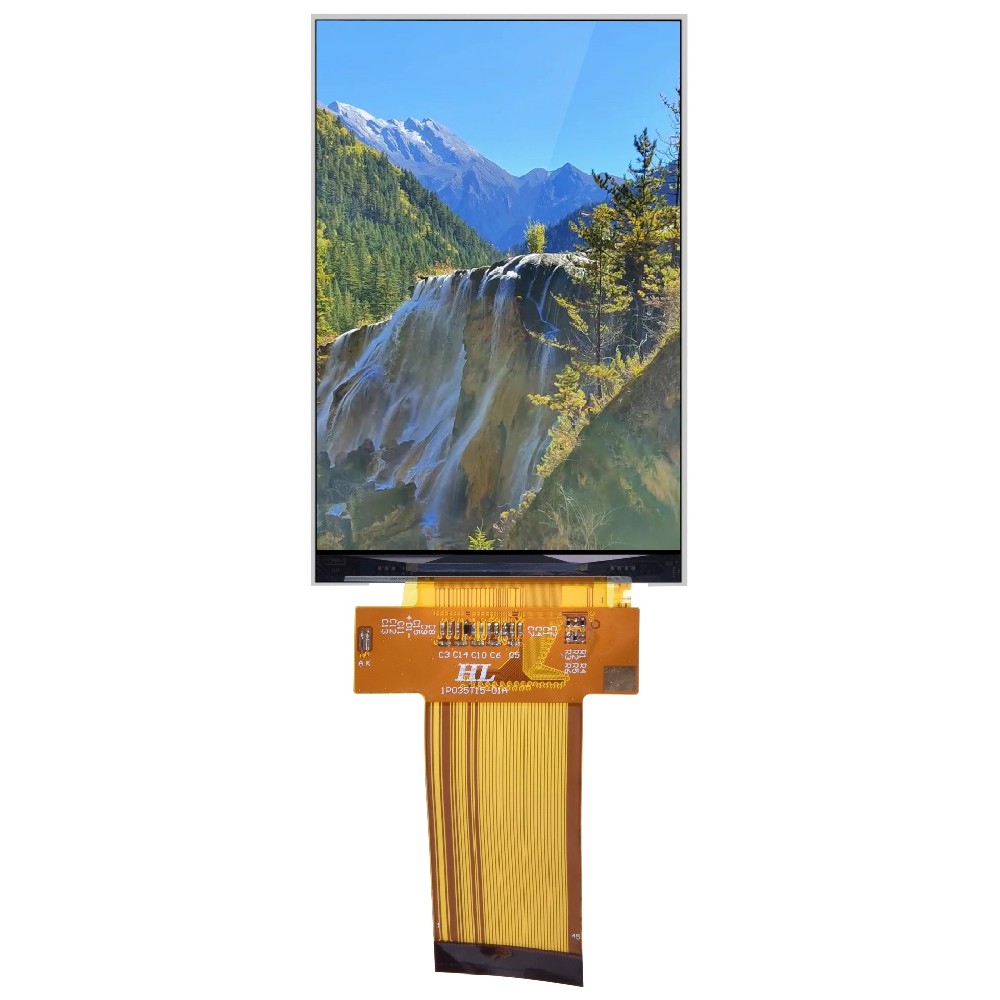
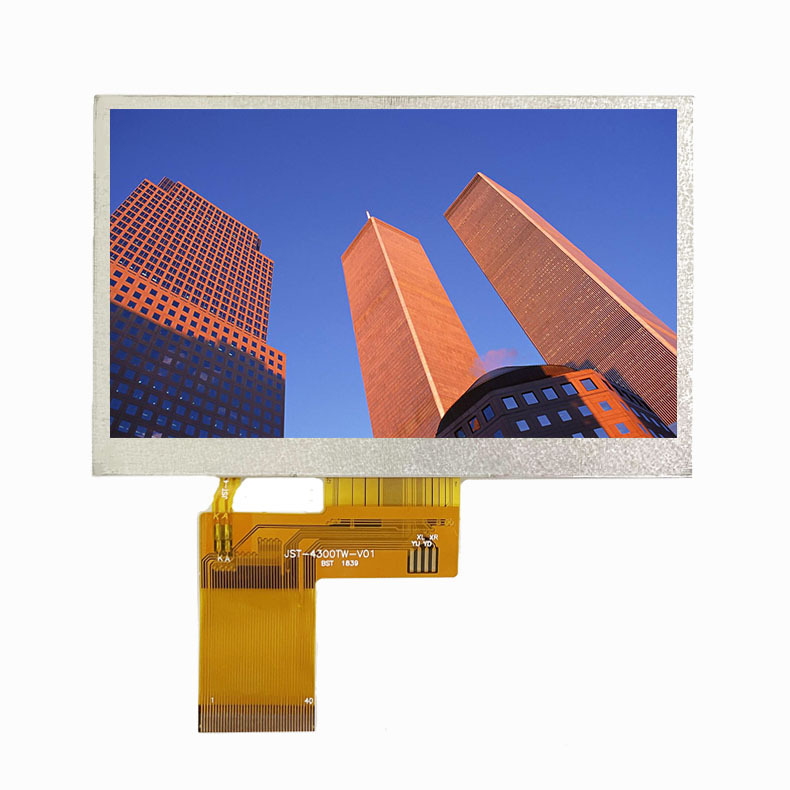
TFT (Thin-Film Transistor) is a switching technology that controls each individual pixel. It serves as the foundational architecture for virtually all modern active-matrix LCD displays. By assigning an independent semiconductor switch to each pixel, TFT enables precise voltage control, which in turn determines the degree of liquid crystal twist and the amount of light passing through each pixel. This is what allows TFT-LCDs to deliver high-speed switching, high brightness, and high contrast.
What Is IPS Technology?
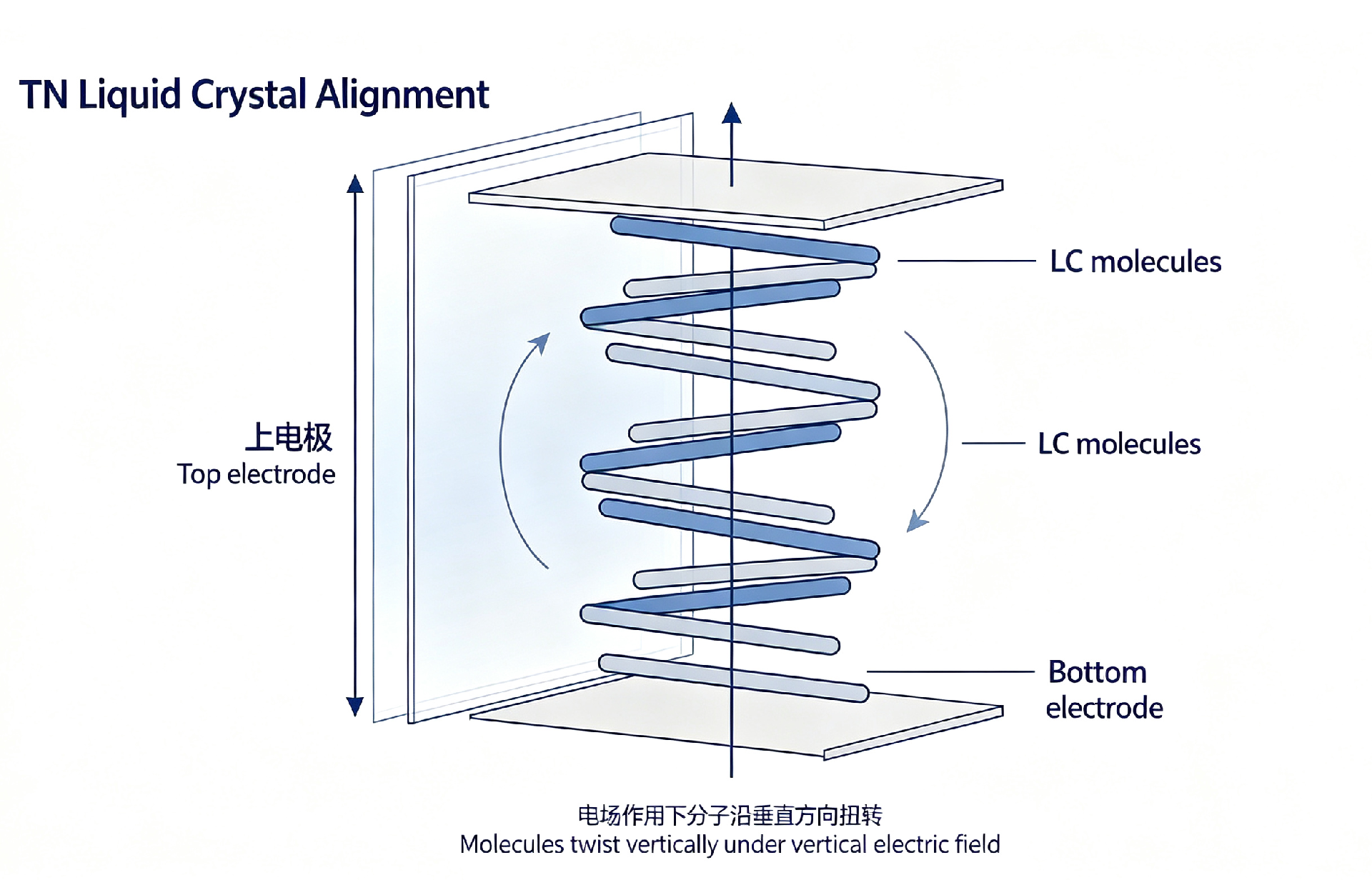
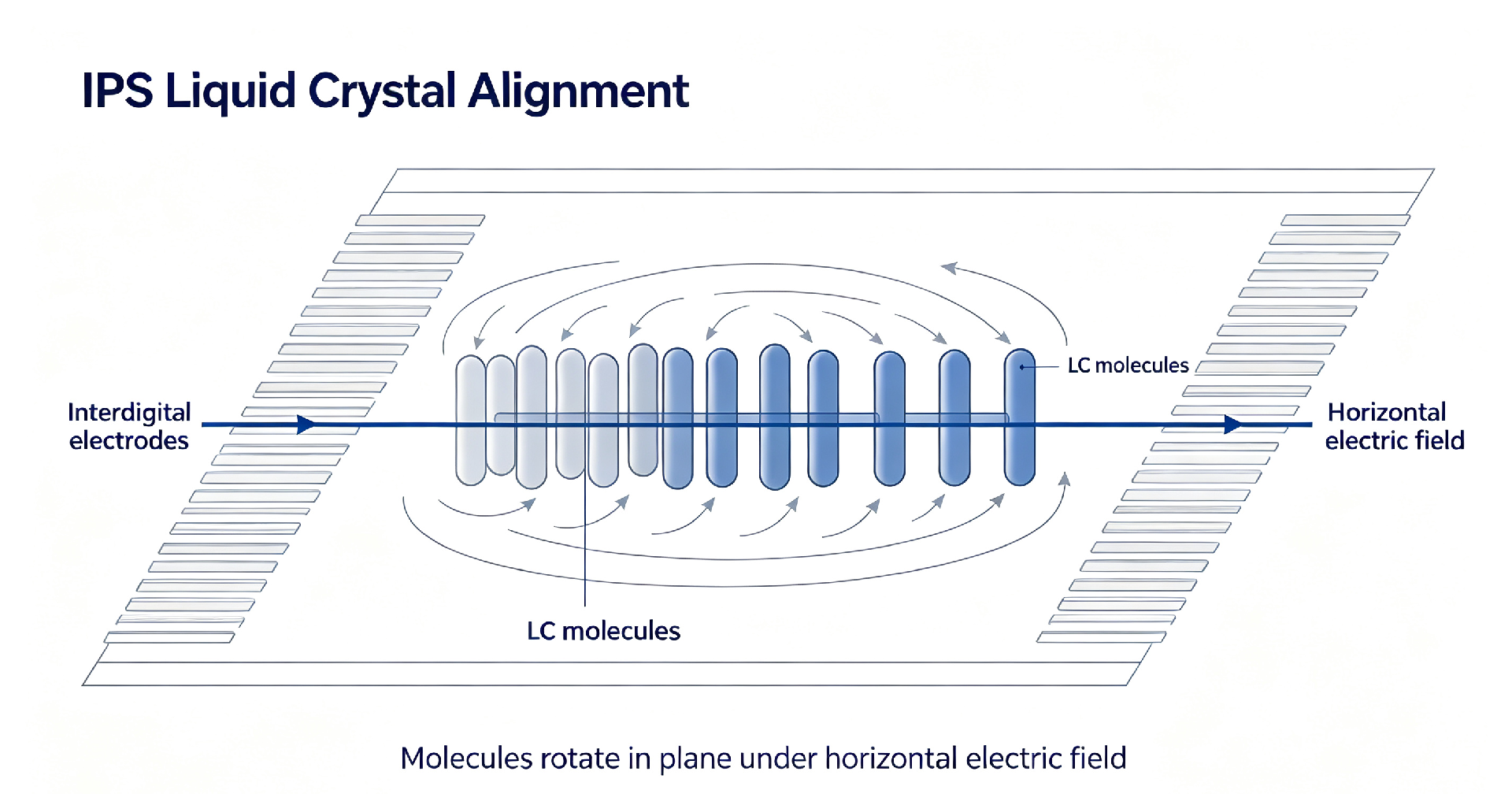
IPS (In-Plane Switching), on the other hand, is a liquid crystal alignment method built upon TFT technology. In conventional TFT panels, liquid crystal molecules twist vertically when voltage is applied. This vertical twist limits viewing angles and causes color shift when viewed off-center. In IPS panels, the electrodes are placed on the same plane, creating a horizontal electric field that causes the liquid crystal molecules to rotate in a plane parallel to the screen surface. This allows more uniform light transmission and delivers significantly improved viewing angles and color performance.
A simple analogy: TFT is the engine, and IPS is the V8 engine — the latter is a higher-performance variant of the former.
IPS vs. Other TFT-LCD Technologies: A Data-Driven Comparison
| Comparison Dimension | TN (TFT-LCD) | VA (TFT-LCD) | IPS (TFT-LCD) |
|---|---|---|---|
| Viewing Angle | Narrow (~140°-160°) | Good (~178°) | Excellent (178° full-angle) |
| Color Accuracy | Poor, obvious color shift | Good | Excellent (ΔE typically <2) |
| Native Contrast Ratio | ~1000:1 | ~3000:1 (advantage) | ~1000:1 |
| Response Time | Fast (1ms) | Slow (typically 4-8ms) | Good (modern IPS: 4-5ms) |
| Touch Stability | Moderate (some watermarking) | Moderate | Excellent (no watermarking) |
| Cost | Low | Medium | Higher (approximately 30%-50% premium) |
| Typical Applications | Entry-level devices, esports monitors | Curved monitors, home TVs | Professional design, automotive, medical, industrial HMI |
Understanding the Trade-offs
TN (Twisted Nematic):
Advantages: Fastest response time (as low as 1ms), lowest cost, lower power consumption.
Disadvantages: Very narrow viewing angles, significant color shift, poor vertical viewing.
Best for: Budget-conscious projects, esports, or applications where only one person views the screen directly.
VA (Vertical Alignment):
Advantages: Highest native contrast ratio (3000:1+), deeper blacks, good viewing angles.
Disadvantages: Slower response time, moderate color accuracy.
Best for: Applications where deep blacks and high contrast are more important than color precision.
IPS (In-Plane Switching):
Advantages: Wide 178° viewing angles, excellent color accuracy, touch stability, consistent brightness across the screen.
Disadvantages: Higher cost, typically lower native contrast than VA, higher power consumption.
Best for: Applications requiring color precision, wide viewing angles, or sunlight readability with optical bonding.
IPS vs. TFT: How to Choose Based on Your Application
Prioritize IPS when:
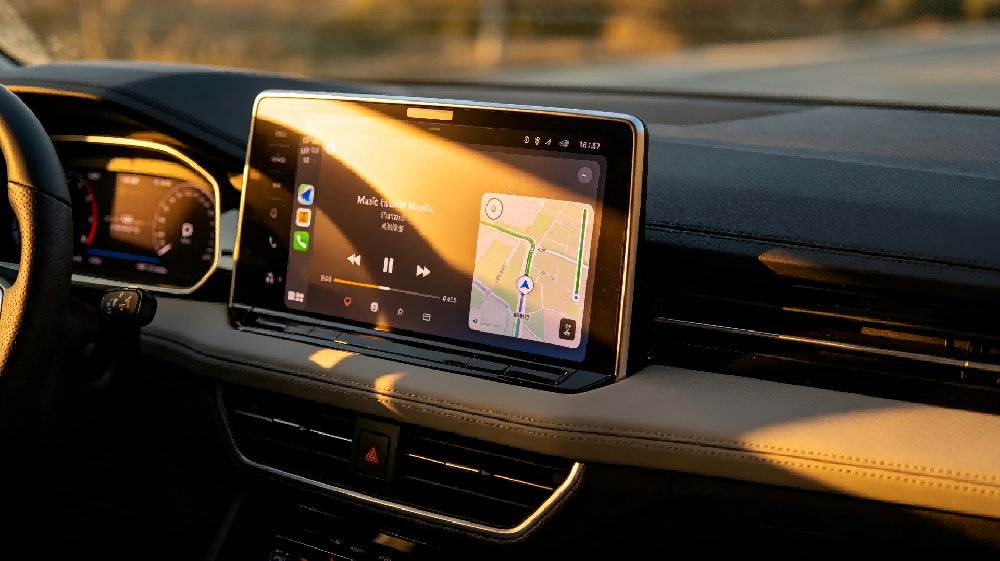
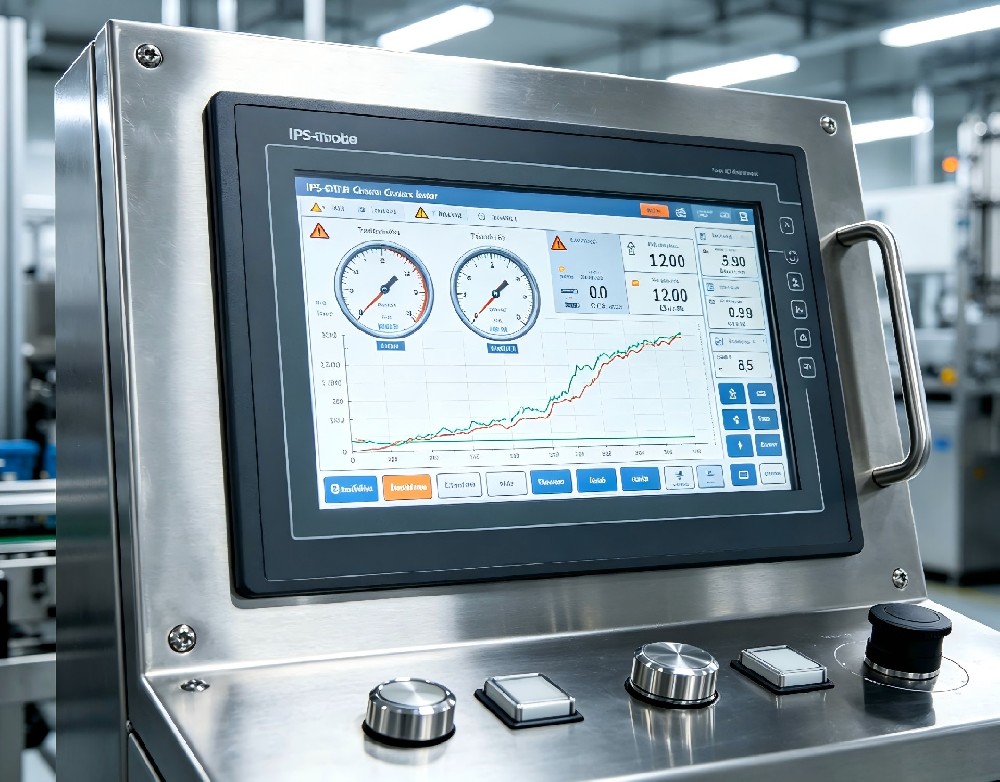
Multi-person, multi-angle viewing is required — Applications such as automotive instrument clusters require that both the driver and passenger can read information from different angles without distortion. Medical monitors and industrial HMIs also benefit critically from IPS's 178° wide viewing angle.
Color accuracy is mission-critical — For medical imaging diagnostics, professional graphic design, or brand showcase displays, IPS's color precision advantage (ΔE < 2) is indispensable and can be a matter of safety or brand reputation.
Sunlight readability is essential — IPS, combined with high-brightness backlighting (1000+ nits) and optical bonding technology, is the ideal solution for outdoor kiosks, marine equipment, and automotive applications. The touch stability of IPS also means no water ripple effect when pressing the screen.
Touchscreen applications are involved — IPS is the preferred choice for resistive or capacitive touch panels because the liquid crystal molecules do not tilt when pressed, eliminating the "water ripple" (mura) effect common in TN panels.
Consider conventional TFT when:
The project is highly cost-sensitive — When display performance requirements are modest (e.g., simple text or basic graphic display), conventional TFT offers a clear cost advantage of 30-50% over IPS.
The viewing angle is fixed and does not require multi-person viewing — For certain fixed-installation industrial equipment where the operator is always directly in front of the screen, the narrow viewing angle of TN is perfectly acceptable.
Ultra-fast response time is the top priority — For applications requiring rapid pixel switching (such as specialized gaming or certain high-speed testing equipment), TN's 1ms response time remains a valid advantage.
High native contrast is preferred over color accuracy — For home entertainment or applications where deep black levels are more important than color fidelity, VA technology offers superior contrast at a lower cost than IPS.
Common Misconceptions Clarified
Misconception 1: IPS and TFT are independent technologies.
In fact, IPS is a type of TFT. Both are built upon the thin-film transistor architecture and differ only in liquid crystal alignment. When you choose IPS, you are selecting a specific liquid crystal technology within the broader TFT-LCD category.
Misconception 2: IPS is always better than TFT.
There is no absolute "better" — only "better suited" to a specific application. Conventional TFT still offers distinct advantages in response time, cost, and in some cases, contrast ratio. The optimal choice always depends on your specific requirements: budget, viewing conditions, ambient lighting, and user scenarios.
Misconception 3: IPS response time is too slow for modern applications.
Modern IPS technology (such as IPS Pro or Advanced IPS) has significantly improved response times. Today's IPS panels typically achieve 4-5ms response times, which is sufficient for the vast majority of industrial, automotive, and commercial applications.
Misconception 4: OLED will soon make all LCD technologies obsolete.
OLED offers excellent color and contrast but still faces challenges in high-brightness sustainability, burn-in risk, and long-term reliability. For professional, industrial, and automotive applications requiring 24/7 operation, long lifecycles (50,000+ hours), and consistent high brightness, IPS TFT-LCD remains the more robust and proven solution.
Conclusion
Choosing the right display technology has no "standard answer" — only the "best fit" for your specific application. The key is to align your choice with your actual operating environment, performance requirements, and budget constraints.
At Hello Lighting Co., Ltd., we bring over 15+ years of experience in designing and manufacturing custom display solutions for industrial, automotive, and professional markets. Our engineering team can help you evaluate your specific application requirements and recommend the optimal display technology — whether IPS or conventional TFT.
If you have a project with unique display requirements, contact our technical team for a one-on-one consultation at email sales@hello-lighting.com