Automotive IPS LCD Displays: Why Wide Viewing Angles Matter for Safety
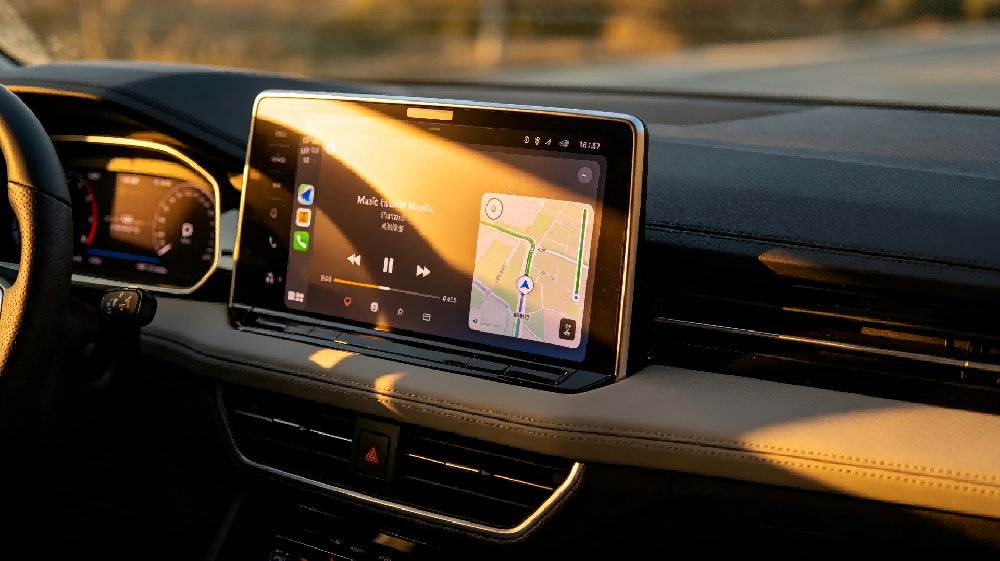
Automotive LCD display screens are viewed from different angles — the driver glancing from the side while keeping eyes on the road, the passenger leaning in, rear-seat occupants watching from behind. In this environment, a display that looks clear straight-on but fades or shifts color off-center becomes more than an annoyance — it becomes a safety concern.
Among TFT-LCD panel technologies — TN, VA, and IPS — only IPS panels maintain consistent color, contrast, and brightness across a full 178° viewing range. As we covered in detail in our previous comparison, TN vs. VA vs. IPS: A Deep Dive into TFT-LCD Panel Technologies, IPS significantly outperforms TN and VA in viewing angle and color performance. This is why IPS has become the default choice for vehicle LCD display systems including instrument clusters, center stacks, and rear-seat entertainment displays.
This article focuses on one question: why does wide viewing angle matter for driving safety, and how should you select an automotive TFT LCD for your project?
Why Viewing Angle Matters for Automotive LCD Display
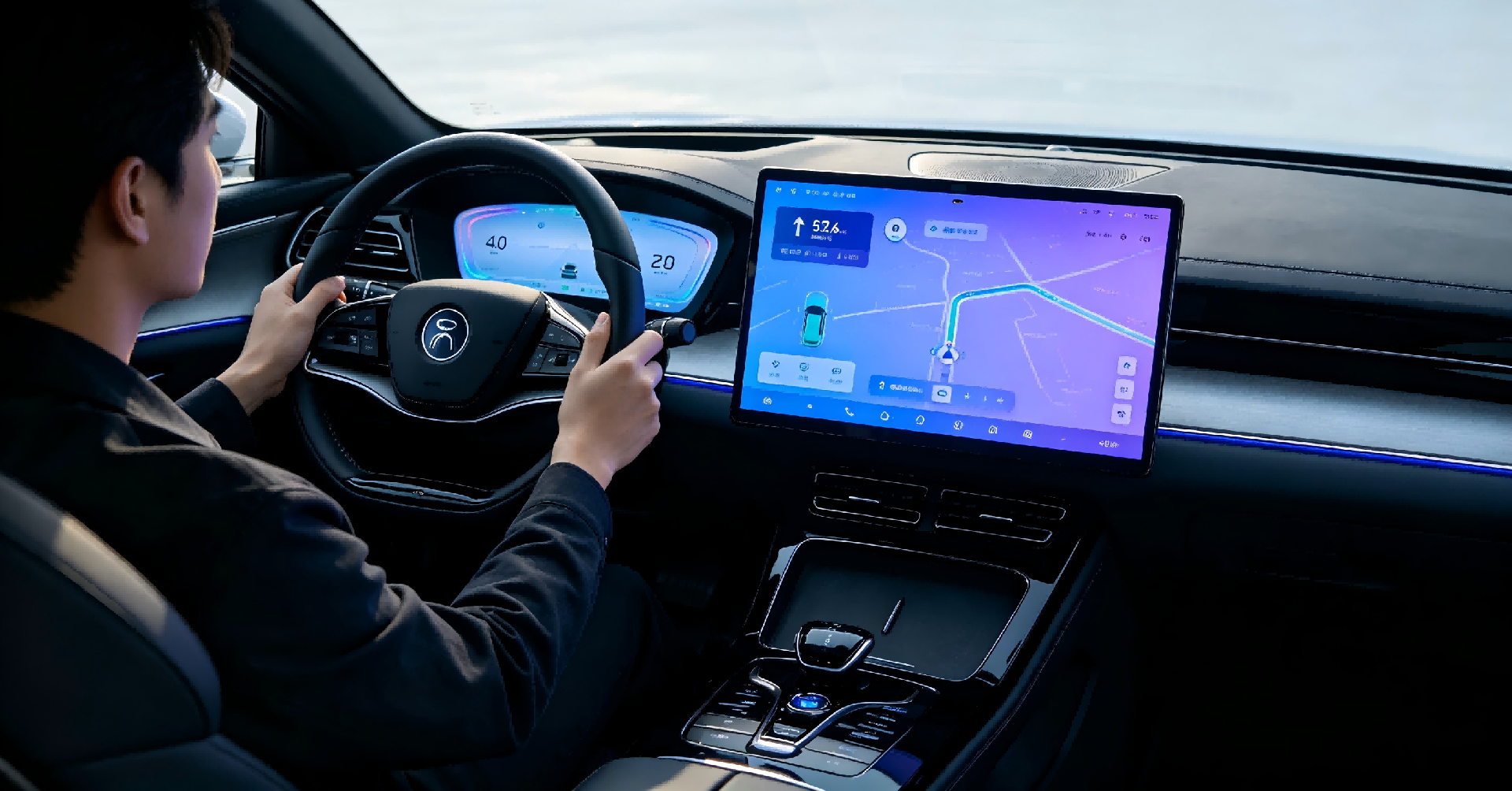
Think about how we actually use screens in a car. The driver glances at the automotive LCD display cluster while keeping their eyes on the road — so they're never looking at it straight-on. The passenger may lean over to check the navigation on the center stack. Kids in the back seat watch movies on rear-seat vehicle LCD display screens.
In all these situations, if the screen's image changes or becomes unclear when viewed from an angle, it's not just annoying — it's a safety risk.
Here's why the three main panel types perform differently off-center.
TN (Twisted Nematic): These automotive display panels respond fast and cost less, but they have a narrow viewing angle. Look at them from the side and the image washes out, colors shift, and it becomes hard to read. For vehicle LCD display applications, where the driver and passengers view the screen from various positions, TN's viewing angle limitations make it unsuitable.
VA (Vertical Alignment): These IPS LCD displays offer deep blacks and high contrast — great for watching movies at home. But in a car, VA panels have a problem: when viewed off-center, the image's contrast and depth change (a phenomenon called gamma shift). A map or icon that looks clear straight-on may appear flat or different when viewed from the side. Our detailed comparison found this to be VA's key limitation in multi-viewer scenarios.
IPS (In-Plane Switching): This is the automotive TFT LCD technology that solves the viewing angle problem. IPS LCD displays keep the image consistent across a wide 178° range — meaning the display looks the same whether you're viewing it straight-on, from the driver's seat, from the passenger side, or from the back. Colors stay accurate. Brightness stays uniform. No washout. No shift. This is why IPS has become the preferred choice for premium vehicle LCD display applications.
How Viewing Angle Directly Impacts Safety
Here are three real driving scenarios that show why this matters for safety:
1. The Glance-and-Return Scenario
When you're driving, you never stare at the screen — you glance. You check your speed on the automotive LCD display, take a quick look at the navigation, then immediately return your eyes to the road. With a narrow-viewing-angle display, that glance isn't efficient: the image from a side angle may be unclear, forcing you to turn your head slightly to get a better view. Those extra fractions of a second add up, especially at highway speeds.
IPS LCD displays let you read the screen quickly from your natural driving position — no head-turning required. Your eyes stay closer to the road, which is exactly where they belong.
2. The Passenger Help Scenario
Imagine you're driving and need to check a navigation route on your vehicle LCD display. Your passenger leans over to help. If the center stack uses a TN or VA panel, the passenger may see a different image than you do — colors shifted, information harder to read. This creates confusion and distraction at a moment when you need clear communication.
IPS LCD displays ensure that what the driver sees and what the passenger sees are the same — consistent, clear, and readable from any seat.
3. The Sunlight Glare Scenario
Vehicle LCD display screens are fixed in place — you can't tilt the instrument cluster to avoid glare. When sunlight hits the screen at a challenging angle, a narrow-viewing-angle automotive display becomes even harder to read. IPS LCD displays, with their wide viewing angle and high-brightness capability (often combined with optical bonding), perform significantly better in these conditions. The screen stays readable even under direct sunlight.
What the Standards Say for Automotive LCD Display
Vehicle LCD display units are held to strict standards because they're considered safety-related components:
| Standard | What It Means | How It Relates to Viewing Angle |
|---|---|---|
| AEC-Q100 | The automotive TFT LCD must survive extreme temperatures, vibration, and aging — and still perform consistently throughout the vehicle's life | Viewing angle performance cannot degrade over time |
| ISO 26262 | Anything that increases driver distraction or cognitive load is a safety issue | A hard-to-read automotive LCD display forces the driver to look longer, increasing cognitive load |
| SAE J1757 | Defines how to measure optical performance | Ensures viewing angle specifications for vehicle LCD display units are measured and validated consistently |
The bottom line: these standards don't specify a number for "minimum viewing angle." But they make it clear: the display must be readable by everyone in the vehicle, from every seat. IPS LCD displays are the only technology that consistently meets this requirement.
Why IPS Has Become the Standard for Vehicle LCD Display
As our earlier technology comparison showed, IPS LCD displays outperform TN and VA across multiple dimensions that matter in a vehicle:
No water ripple when touched: Have you ever pressed a screen and seen a wavy pattern appear around your finger? That's called mura, or water ripple. It happens with TN and VA panels when pressure is applied. IPS LCD displays don't have this problem. In a car, where automotive display screens are touched frequently — sometimes with gloves, sometimes in rough conditions — this matters. The image stays clear even under direct touch.
Even brightness from edge to edge: IPS LCD displays deliver consistent brightness across the entire screen. This ensures that corners and edges of your vehicle LCD display remain readable from various angles within the cabin.
Consistent color across temperature: Automotive TFT LCD screens experience extreme temperature swings. IPS LCD displays maintain color accuracy across a wider temperature range, which is critical when the cabin goes from -40°C in winter to +85°C in summer.
Selection Checklist for Automotive LCD Display
| Parameter | What to Look For | Why It's Important |
|---|---|---|
| Panel Type | IPS, not TN or VA | Vehicle LCD display needs consistent viewing from all seats |
| Viewing Angle | 178° (IPS standard) | Everyone in the cabin needs to see the screen clearly |
| Brightness | 1000+ nits | Without this, sunlight will wash out the display |
| Optical Bonding | Recommended | Reduces reflection; makes a huge difference in sunlight |
| Temperature Range | -40°C to +95°C | Cabin temperatures range from freezing cold to blazing hot |
| Interface | LVDS preferred | Handles longer cables and electrical noise better |
| Lifecycle | 10+ years availability | Vehicle models stay in production for years; the automotive LCD display must stay available |
| AEC-Q100 | Full qualification | Required for any display going into a production vehicle |
Conclusion
Here's the bottom line: IPS LCD displays with wide viewing angles are not a luxury feature in vehicles — they're a functional requirement for any serious automotive LCD display application.
When selecting vehicle LCD display units for instrument clusters, center stacks, or rear-seat entertainment, make sure the panels are IPS LCD displays, not TN or VA. Prioritize high brightness (1000+ nits), optical bonding for sunlight readability, and full AEC-Q100 qualification.
The right automotive TFT LCD display keeps everyone informed, reduces driver distraction, and contributes to safer driving.