TN vs. VA vs. IPS: How to Choose the Right TFT-LCD Panel
TN (Twisted Nematic), VA (Vertical Alignment), and IPS (In-Plane Switching) technologies each have their own advantages and disadvantages in terms of viewing angle, color accuracy, response speed, contrast ratio, power consumption, and cost. Understanding these differences is crucial for engineers and purchasing decision-makers to make the right choice.
This article will explain the fundamental differences between the three technologies starting from their microstructure principles and provide a practical selection framework applicable to industrial, automotive, and medical applications.
New to this field? We recommend reading our introductory article first: "TFT vs. IPS: Which Display Technology is Right for Your Application?"
Microstructural Principles:TN vs VA vs IPS
To understand how these technologies differ, we must start at the molecular level.
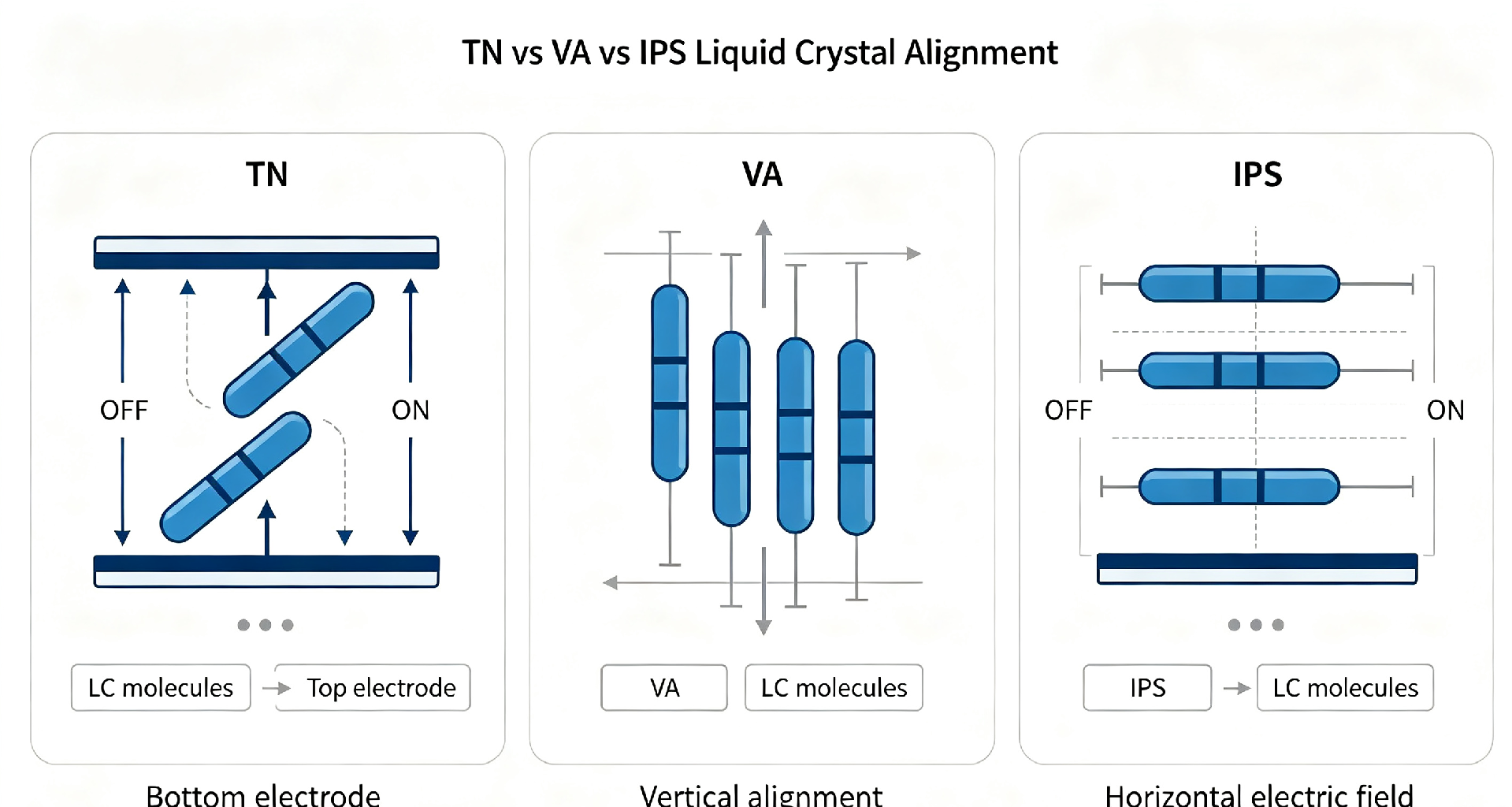
TN (Twisted Nematic)
In its natural state, TN liquid crystal molecules twist 90° between the two glass substrates. When voltage is applied, the molecules stand upright, blocking light. By controlling the voltage, light transmission can be precisely regulated.
Key traits: TN is the oldest and simplest LCD technology. It offers the lowest manufacturing cost and the fastest response time (as fast as 1ms). However, when viewed off-center, the tilted molecules cause rapid brightness and color degradation.
VA (Vertical Alignment)
In its natural state, VA liquid crystal molecules stand vertically to the substrate surface, effectively blocking backlight leakage and delivering deep black levels. When voltage is applied, the molecules tilt horizontally, allowing light to pass through.
Key traits: VA delivers the highest native contrast ratio (3000:1 or higher) and the purest black levels. Viewing angles are better than TN but not as good as IPS. Off-center viewing causes gamma shift, which alters the perceived depth of the image.
IPS (In-Plane Switching)
IPS places electrodes on the same plane. When voltage is applied, liquid crystal molecules rotate horizontally — in-plane — rather than tilting vertically. Because the molecules move in a parallel plane, light paths remain consistent across different viewing angles, preserving color and brightness.
Key traits: IPS offers the widest viewing angles (178°), the highest color accuracy (typically ΔE < 2), and excellent touch stability — no water ripple (mura) effect when pressed. The trade-offs are higher cost and lower native contrast compared to VA.
TN vs. VA vs. IPS: Key Parameter Comparison
| Parameter | TN | VA | IPS |
|---|---|---|---|
| Viewing Angle | Narrow (~140°-160°) | Good (~178°) | Excellent (178°) |
| Color Accuracy | Poor, noticeable shift | Good | Excellent (ΔE < 2) |
| Native Contrast | ~1000:1 | ~3000:1 | ~1000:1 |
| Response Time | Fast (1ms) | Slow (4-8ms) | Good (4-5ms) |
| Touch Stability | Moderate | Moderate | Excellent |
| Cost | Low | Medium | Higher (30%-50% premium) |
| Typical Applications | Entry-level, esports | Curved monitors, TVs | Professional, automotive, medical, industrial |
TN — Speed at a Cost
Strengths: Fastest response (1ms), lowest cost, lowest power consumption.
Weaknesses: Narrow viewing angles, severe color shift off-center, especially poor vertical viewing (grayscale inversion possible).
Best for: Budget-limited projects with single-user, head-on viewing. TN is largely obsolete in industrial, automotive, and medical applications.
VA — Contrast for Immersion
Strengths: Highest native contrast (3000:1+), deepest blacks, no IPS Glow, best light-leakage control.
Weaknesses: Slower response (4-8ms), gamma shift off-center, viewing angle performance inferior to IPS in practice.
Best for: Home cinema, curved monitors — applications where deep blacks and immersive contrast matter more than color precision.
IPS — Color and Viewing Angle Excellence
Strengths: Widest viewing angles (178°), best color accuracy (ΔE < 2), no water ripple on touch, uniform brightness across the screen.
Weaknesses: Higher cost, lower contrast than VA, IPS Glow (corner light leakage in dark scenes), higher power consumption.
Best for: Industrial HMI, automotive instrument clusters, medical imaging, outdoor/sunlight-readable devices — scenarios where color precision, viewing angle consistency, and touch reliability are non-negotiable.
Viewing Angle Comparison: TN vs VA vs IPS
| Off-Center Performance | TN | VA | IPS |
|---|---|---|---|
| Horizontal Viewing | Narrow, strong color shift | Good, minor shift | Excellent, stable |
| Vertical Viewing | Poor — grayscale inversion | Good, with gamma shift | Excellent |
| Color Change at Angle | Severe | Gamma shift | Minimal |
| Brightness Drop at Angle | Severe | Moderate | Minimal |
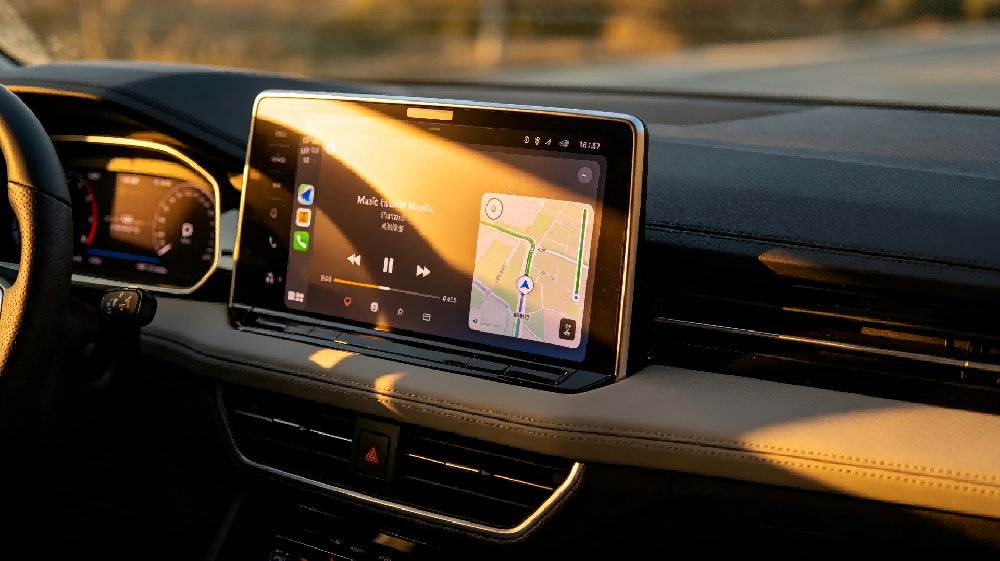
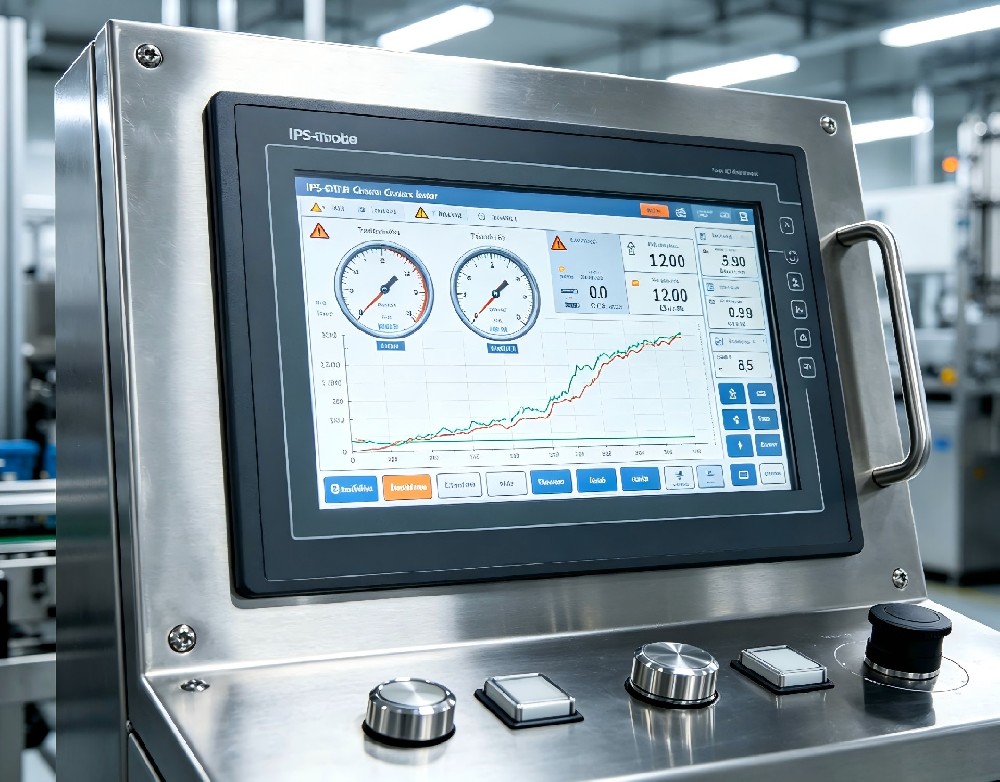
For automotive clusters and industrial HMI — where multiple users view the screen from different positions — IPS is not a luxury but a functional requirement.
Selection Framework
Does your application require multi-person, multi-angle viewing? → Yes → IPS
Is color accuracy critical? (medical imaging, professional design) → Yes → IPS
Is high contrast and deep black your top priority? (home theater) → Yes → VA
Is cost extremely sensitive? → Yes → TN (only for basic needs) / No → IPS
Application Recommendations
| Application | Recommended | Key Rationale |
|---|---|---|
| Industrial HMI | IPS | Multi-user viewing, touch stability, wide temperature |
| Automotive Clusters | IPS | Safety-critical wide angles, AEC-Q100 compliance |
| Medical Imaging | IPS | Color accuracy (ΔE < 2) impacts diagnosis |
| Outdoor/High-Ambient | IPS | High brightness + optical bonding for sunlight readability |
| Home Cinema | VA | High contrast (3000:1+) for immersive viewing |
| Curved Monitors | VA | Contrast + curved design enhances immersion |
| Professional Esports | TN or IPS | Pure speed = TN; balanced performance = Fast IPS |
Technology Evolution of TN & VA & IPS
TN (1980s–1990s): First commercialized LCD technology — remains in low-end markets.
IPS (1996–present): Developed to solve TN's viewing-angle limitations — continuously iterated (IPS Pro, AH-IPS, Advanced IPS).
VA (late 1990s–present): Developed to improve contrast — dominates TV and curved monitor markets.
| Technology | Market Trend | Dominant Applications |
|---|---|---|
| TN | Declining | Entry-level devices |
| VA | Stable | TVs, curved monitors |
| IPS | Growing | Professional, automotive, industrial, medical |
Conclusion
Quick summary:
Wide viewing angles and color accuracy required → IPS (industrial, automotive, medical)
High contrast and deep black required → VA (home cinema, curved monitors)
Ultra-fast response or cost control → TN (esports, budget projects)
For industrial, automotive, or professional applications, IPS offers the most balanced and versatile performance.
If you want to find reliable IPS LCD displays manufacturer, please feel free to send your detailed requirements to email: sales@hello-lighting.com