Why Industrial Applications Need Wide-Temperature IPS-TFT LCD Displays
Wide-Temperature IPS-TFT LCD displays are designed for industrial applications where reliable visual performance is required under demanding environmental conditions. Unlike consumer electronics, industrial equipment may operate outdoors, in transportation systems, energy facilities, or other locations exposed to significant temperature changes and continuous operation.
In these environments, a standard TFT LCD may experience slower response at low temperatures, reduced optical performance at high temperatures, or accelerated component aging over time. These problems can affect not only image quality but also the reliability and service life of the equipment.
This is why a Wide Temperature TFT LCD is often considered when an industrial product needs to operate reliably across a broad temperature range. By combining temperature-optimized LCD materials, reliable backlight design, and IPS technology, industrial displays can provide more consistent performance in harsh environments.
But why does temperature matter so much, and what makes a Wide-Temperature IPS-TFT LCD different from a standard display?
Why Standard TFT LCDs Can Struggle in Harsh Industrial Environments
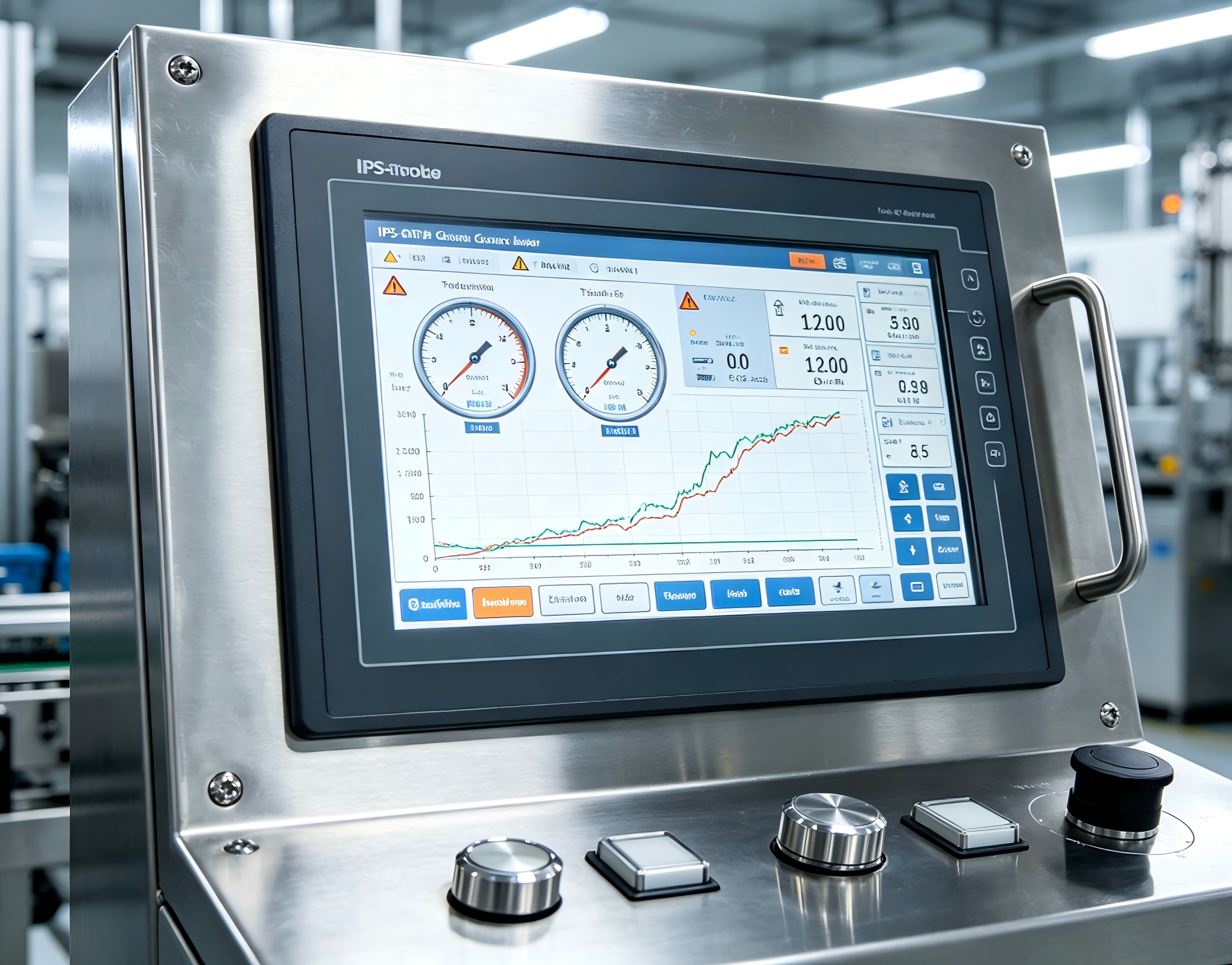
Standard TFT LCD panels are generally designed for relatively controlled operating conditions. Industrial equipment, however, can face much wider environmental variations.
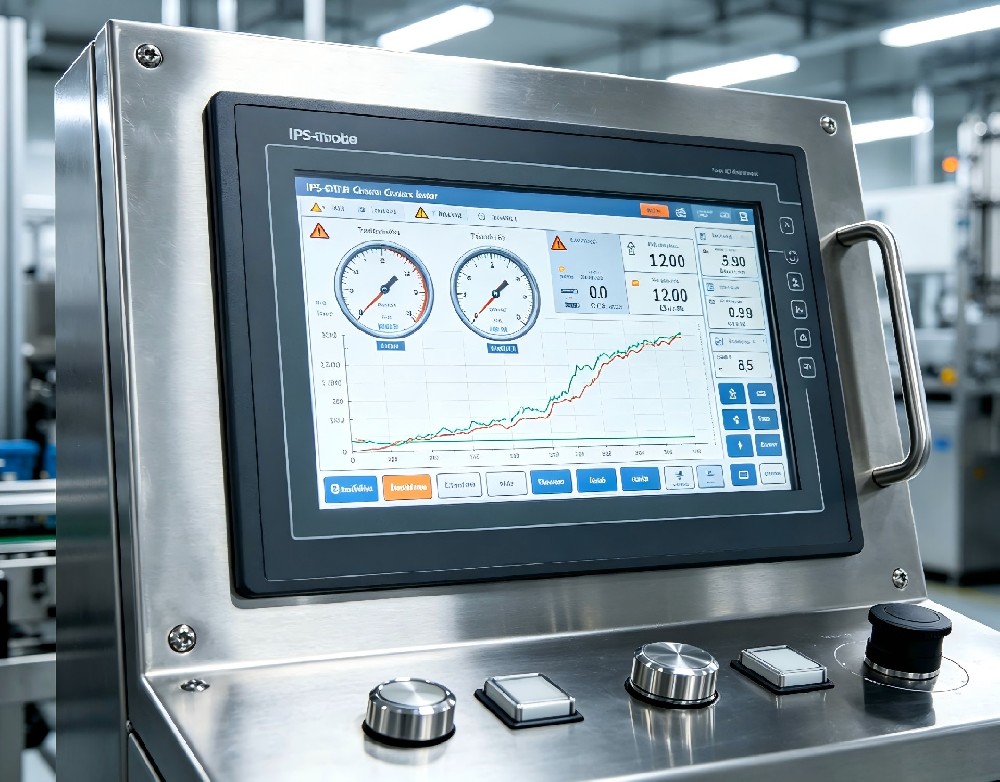
Depending on the application, an Industrial TFT LCD Display may need to operate through hot summers, cold winters, direct sunlight, vibration, and long periods of continuous use.
Temperature is particularly important because it affects several components within an LCD module.
Low Temperature Can Slow LCD Response
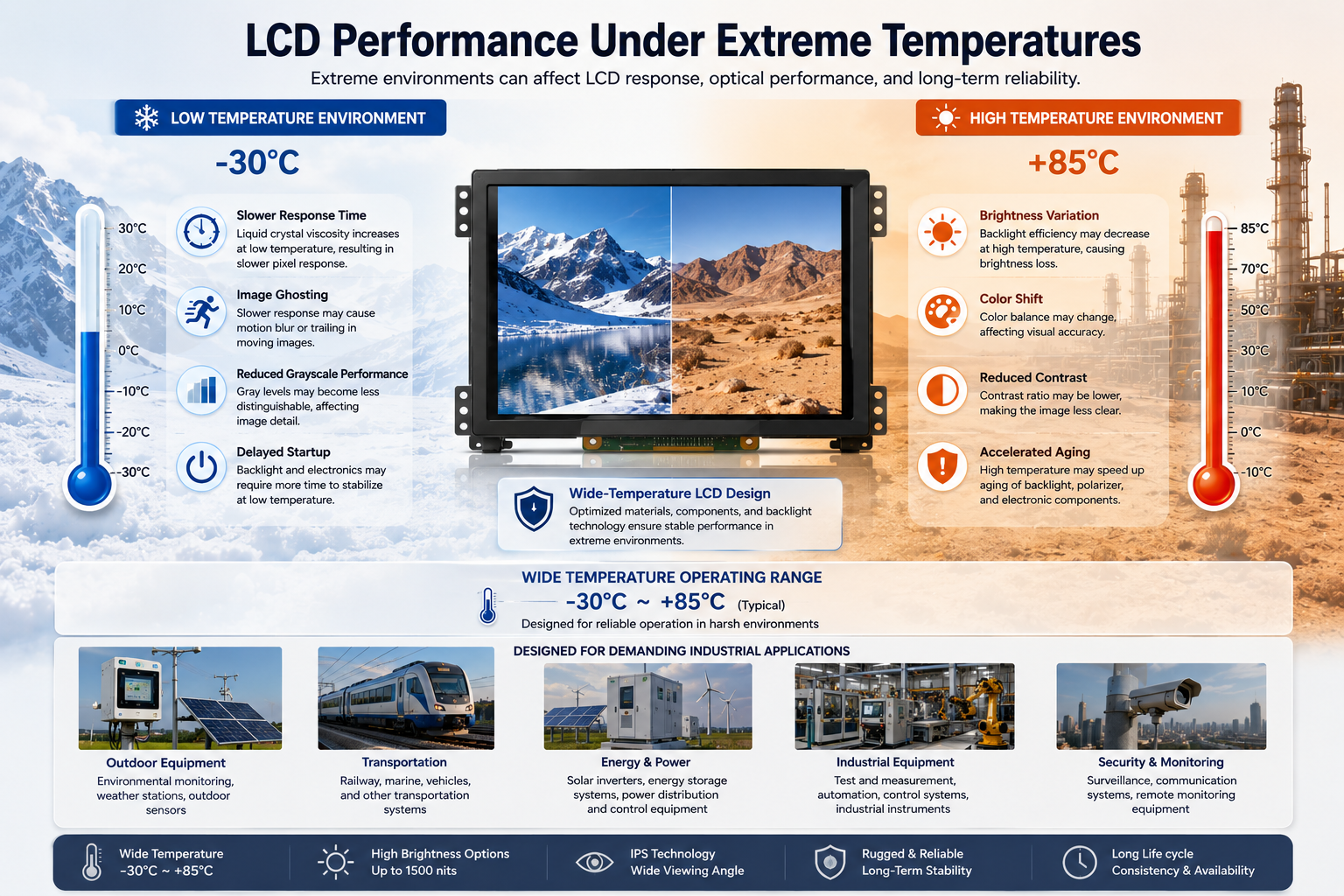
At low temperatures, the viscosity of liquid crystal materials increases. As the liquid crystal molecules move more slowly, the display response time can become longer.
This may result in:
Slower image response
Motion trailing
Reduced grayscale performance
Delayed startup behavior
For equipment installed outdoors or used in cold environments, these effects can become noticeable during low-temperature operation.
A Wide Temperature TFT LCD uses liquid crystal materials selected and optimized for broader temperature performance, helping maintain more stable display characteristics when temperatures fall.
High Temperature Can Accelerate Component Aging
High temperatures create a different set of challenges. Continuous exposure to heat can accelerate the aging of LCD components and affect long-term performance.
For example, excessive heat may influence:
Liquid crystal stability
LED backlight performance
Polarizer and optical film aging
Driver component reliability
The result can be declining brightness, changes in contrast, color variation, or a shorter display lifetime.
For this reason, industrial LCD design needs to consider not only whether a panel can operate at a particular temperature, but also whether its optical and electrical performance remains stable over time.
How Wide-Temperature IPS-TFT LCD Displays Improve Reliability
A reliable Wide-Temperature IPS-TFT LCD is not created simply by changing the temperature specification on a product datasheet. Its performance depends on the materials, components, and engineering decisions used throughout the display module.
Optimized Liquid Crystal Materials
The liquid crystal layer plays a critical role in display response and image quality.
For wide-temperature applications, liquid crystal materials can be selected for improved performance across a broader temperature range. This helps reduce the response-time degradation normally associated with low temperatures.
The objective is not simply to achieve a wider operating temperature specification, but to maintain useful image performance throughout that range.
Reliable Backlight Design
The backlight is another important part of an industrial LCD display.
For long-term applications, engineers need to consider:
LED operating characteristics
Brightness requirements
Heat generation
Driving current
Thermal management
A poorly designed backlight may experience faster brightness degradation when exposed to elevated temperatures.
For outdoor applications, a high brightness industrial display may also be required to maintain visibility under strong ambient light. In these cases, brightness needs to be considered together with thermal performance and expected operating lifetime.
IPS Technology for Consistent Viewing Performance
Wide-temperature capability addresses environmental reliability, while IPS technology improves visual performance.
IPS TFT LCD technology provides a wide viewing angle, allowing information to remain easier to read when viewed from different directions. This is particularly useful for industrial equipment where the display may not always be viewed directly from the front.
IPS technology can also provide better color consistency across different viewing angles, helping maintain a stable visual experience.
For an industrial LCD display, this combination of environmental stability and consistent viewing performance can be more valuable than simply increasing resolution.
Why Temperature Range Alone Is Not Enough
When evaluating a Wide Temperature TFT LCD, it is common to focus on the operating temperature specification.
For example, a product may specify a range such as -30°C to +80°C.
However, this number does not tell the complete story.
Two displays with the same temperature specification may perform differently in actual industrial environments. Engineers should also consider how temperature affects brightness, response time, contrast, and long-term reliability.
Brightness Stability
For outdoor equipment, display brightness can be affected by both temperature and long-term LED aging.
A display may initially provide sufficient brightness, but its performance needs to remain acceptable throughout the expected service life.
This is particularly important for outdoor TFT LCD displays exposed to direct sunlight.
Optical Performance
Temperature changes can influence the optical characteristics of an LCD.
Important parameters include:
Contrast
Color consistency
Response time
Viewing angle
Overall readability
A reliable industrial display should be evaluated based on its performance under actual environmental conditions rather than temperature range alone.
Long-Term Reliability
Industrial equipment often has a significantly longer product lifecycle than consumer electronics.
A display used in industrial equipment may need to remain available for several years after the initial product launch. Therefore, manufacturers should consider:
Long-term component availability
Consistent specifications
Product lifecycle management
Engineering support
Replacement or redesign options
This is an important part of selecting an industrial grade LCD module.
Where Are Wide-Temperature IPS-TFT LCD Displays Used?
The need for wide-temperature performance is particularly strong in applications where displays are exposed to uncontrolled environmental conditions.
Outdoor Industrial Equipment
Outdoor equipment can experience large temperature fluctuations throughout the year, combined with sunlight, dust, and moisture.
Examples include:
Environmental monitoring equipment
Outdoor measurement devices
Smart infrastructure equipment
Industrial monitoring systems
These applications may require a combination of wide-temperature operation, high brightness, and optical enhancement.
Transportation Equipment
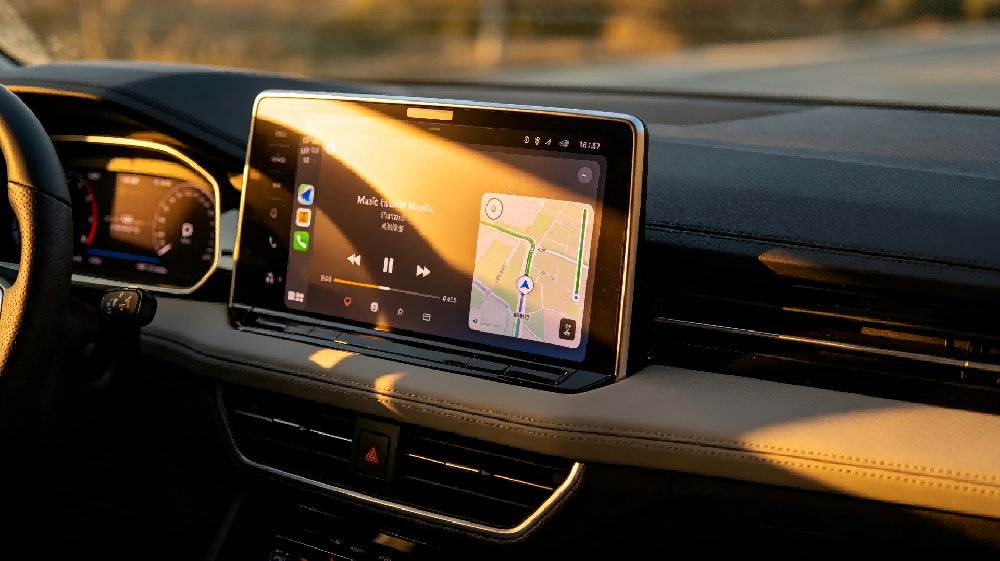
Transportation equipment can operate in both hot and cold environments while being exposed to vibration and continuous use.
Examples include:
Railway equipment
Marine equipment
Vehicle-mounted systems
Transportation monitoring devices
For these applications, a rugged TFT LCD display needs to maintain stable performance despite changing environmental conditions.
Energy and Power Equipment
Energy equipment is frequently installed outdoors and designed for long service life.
Applications may include:
Solar energy systems
Battery storage equipment
Power monitoring devices
Outdoor energy infrastructure
A Wide-Temperature IPS-TFT LCD can help provide clear and stable visual information across changing weather conditions.
Medical and Measurement Equipment
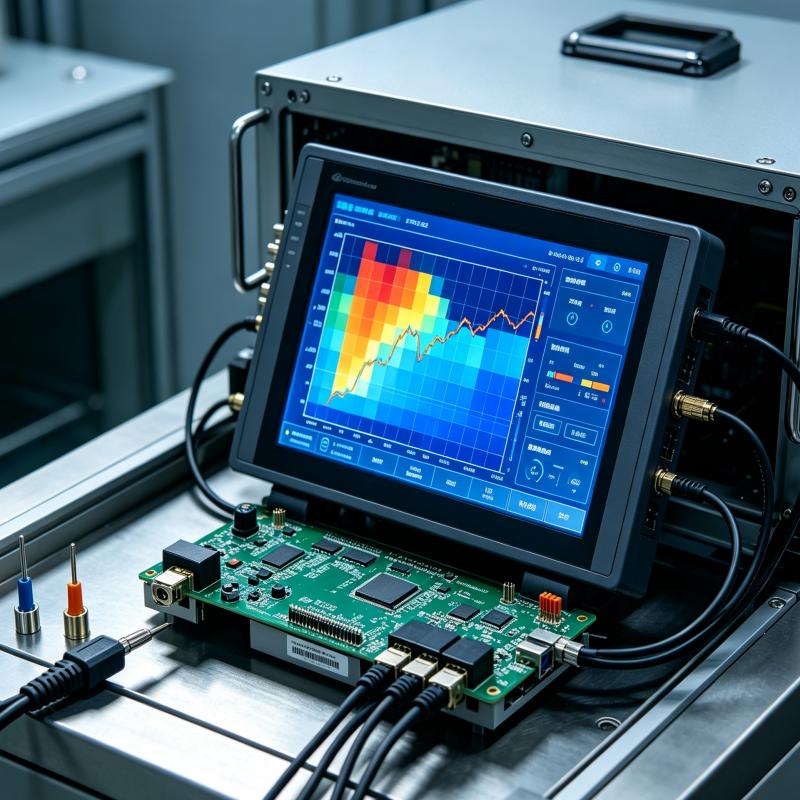
Some medical, testing, and measurement equipment also requires displays with stable optical performance and long-term availability.
In these applications, consistent image quality can be important for displaying measurements, system status, and other information.
How to Select the Right Wide-Temperature IPS-TFT LCD
Selecting the right display starts with understanding the actual operating environment rather than choosing a temperature specification in isolation.
1. Define the Temperature Range
Identify both:
Actual operating temperature
Storage temperature
It is also useful to consider how quickly the equipment may transition between hot and cold conditions.
2. Determine the Brightness Requirement
Indoor and outdoor applications have very different brightness requirements.
For outdoor equipment, high brightness may need to be combined with anti-glare or anti-reflective treatment to improve readability.
3. Evaluate Optical Requirements
Depending on the application, an industrial display may require:
Anti-glare treatment
Anti-reflective treatment
Optical bonding
Cover glass
These technologies can help address reflection, sunlight readability, and environmental durability.
4. Consider Mechanical and Interface Compatibility
The display also needs to match the equipment's physical and electrical design.
Important considerations include:
Display size
Resolution
Active area
Connector position
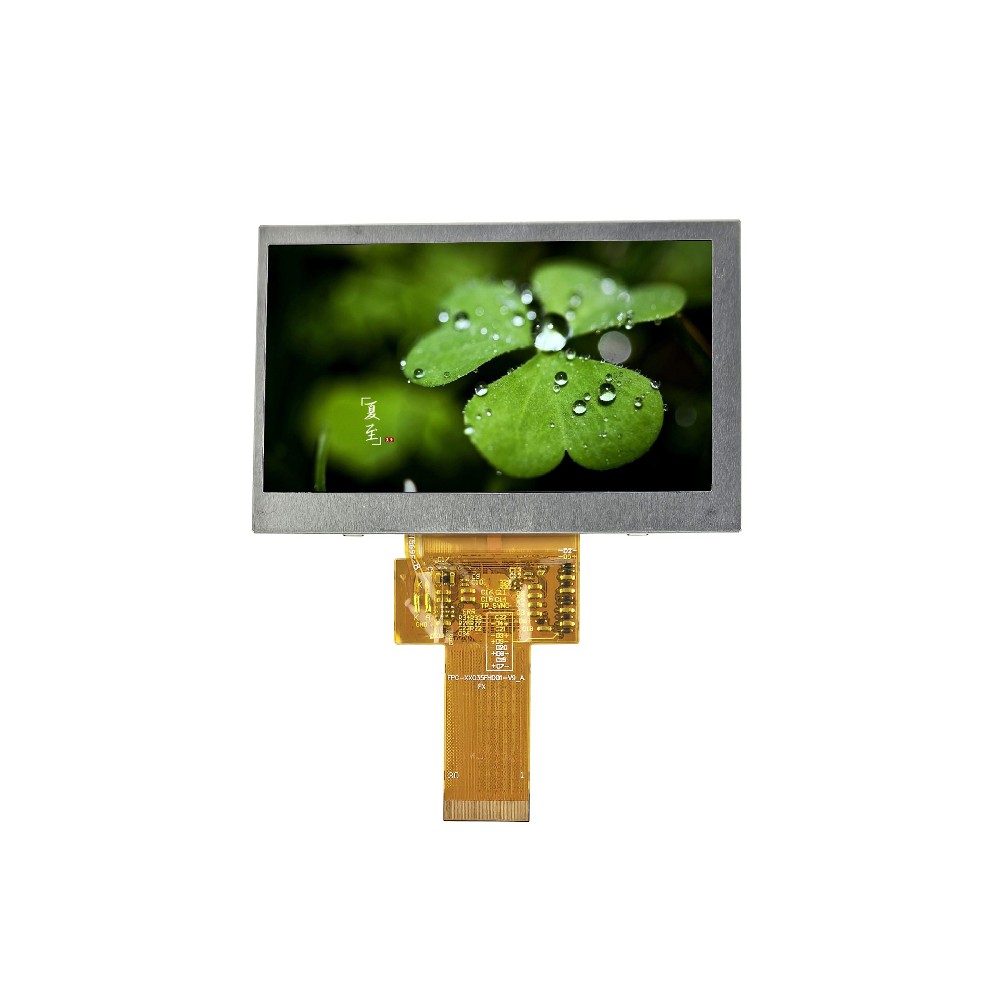
FPC design
Interface
Common TFT LCD interfaces include RGB, LVDS, and MIPI.
Conclusion: Choosing the Right Display for Harsh Industrial Environments
Wide-Temperature IPS-TFT LCD displays are designed to address one of the key challenges facing industrial equipment: maintaining reliable display performance when environmental conditions are unpredictable.
Extreme cold can slow LCD response, while high temperatures can accelerate component aging and brightness degradation. At the same time, outdoor applications may introduce sunlight, moisture, and other environmental challenges.
A well-designed Industrial TFT LCD Display addresses these requirements through temperature-optimized liquid crystal materials, reliable backlight design, IPS technology, and appropriate optical solutions.
For industrial equipment manufacturers, the goal should not simply be to select an LCD with the widest temperature specification. The better approach is to evaluate the complete display solution—including optical performance, mechanical design, reliability, and long-term product availability—against the actual application environment.
When these factors are considered together, a Wide-Temperature IPS-TFT LCD can provide the stable and dependable display performance required for demanding industrial applications.
FAQ
What is a Wide-Temperature IPS-TFT LCD?
A Wide-Temperature IPS-TFT LCD is an industrial-grade TFT display designed to maintain stable performance across a wider operating temperature range than standard LCD panels. IPS technology also provides wide viewing angles and consistent image performance.
Why does low temperature affect TFT LCD performance?
Low temperatures increase the viscosity of liquid crystal materials, which can slow molecular movement and increase display response time. This may result in image trailing or slower display response.
Why are Wide-Temperature TFT LCD displays used outdoors?
Outdoor equipment can experience extreme temperatures, direct sunlight, and significant environmental changes. Wide-temperature displays are designed to provide more stable performance under these conditions.
Is IPS suitable for industrial LCD applications?
Yes. IPS TFT LCD technology provides wide viewing angles and good image consistency, making it suitable for many industrial equipment and instrumentation applications.
Is temperature range the only factor when selecting an industrial LCD?
No. Brightness stability, optical performance, backlight design, mechanical compatibility, reliability, and long-term product availability should also be considered.